
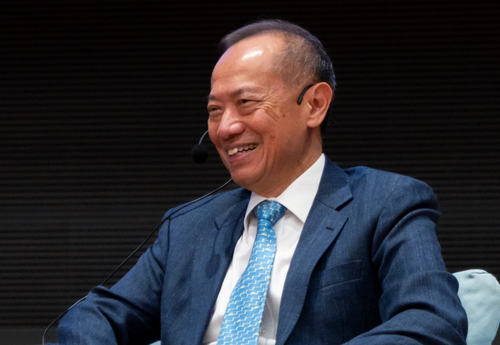
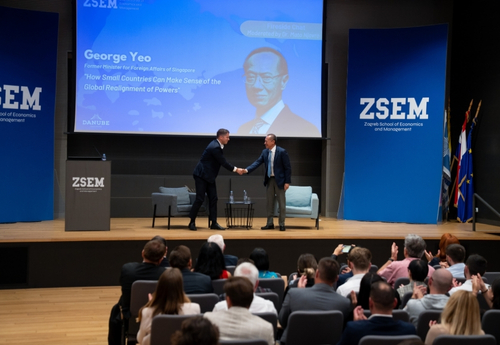
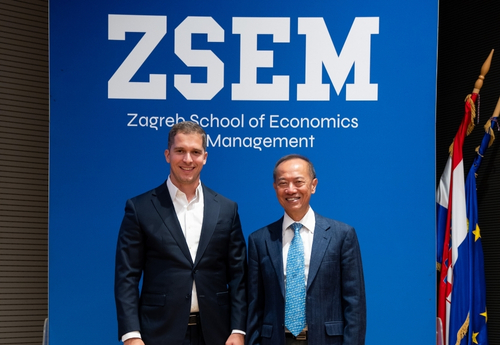
On September 17, the Zagreb School of Economics and Management had the honor of hosting George Yeo, former Minister of Foreign Affairs of Singapore, for an inspiring Fireside Chat.
George Yeo has had an outstanding career in public service and international diplomacy. Over more than two decades in the Singapore government, he held various ministerial positions, including Information and the Arts, Health, Trade and Industry, and from 2004 to 2011 he served as Minister of Foreign Affairs. Before entering politics, he served in the Singapore Armed Forces, where he rose to the rank of Brigadier General.
Beyond his political and military career, George Yeo has also made his mark in the business world as CEO of Kerry Logistics Network, and has contributed to the work of numerous international institutions. Notably, he served as a member of the Pontifical Commission for Reference on the Economic-Administrative Structure of the Holy See (2013–2014) and the Vatican Council for the Economy (2014–2020). He holds a degree in Engineering from the University of Cambridge and earned his MBA from Harvard Business School.
The full conversation is available on our YouTube channel.
In his address, Mr. Yeo raised an important question: How can small states understand and navigate a rapidly changing global order?
He emphasized that small states often lack the ability to set the rules of the game, but must learn how to navigate them wisely. This often involves making difficult choices and seeking a balance between principle and pragmatism.
He underlined that change is a constant dimension of international relations and that asking the right questions is crucial. Instead of asking “Can we change the world?”, it is far more important to consider “How is reality changing, and where will it be ten years from now?” Such forward-looking thinking enables smaller states to remain resilient and relevant.

Furthermore, he spoke about the role of smaller states in the global system. Although their power may be limited, they still have the ability to act strategically, form partnerships, and make decisions that give them a clearly defined space within the broader international community.
Finally, drawing on his own experience in government, diplomacy, and institutions such as the Vatican, Yeo offered a unique perspective on global processes, governance, and economic reforms, leaving the audience with valuable insights on the challenges and opportunities of the future.

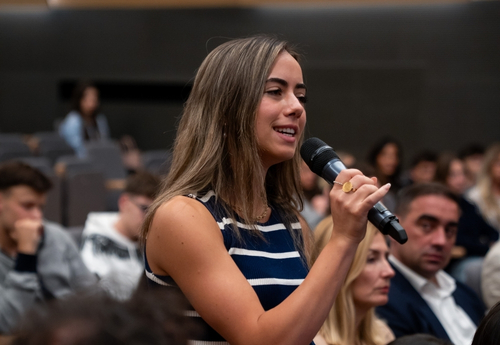
We would like to thank Mr. George Yeo for joining us and sharing his inspiring insights, as well as our Dean, Dr. Mato Njavro, for expertly moderating the conversation. A special thanks also goes to our students, faculty, and guests, whose questions and participation contributed to the success of the event.

A new partnership opens exciting study opportunities in the United States.
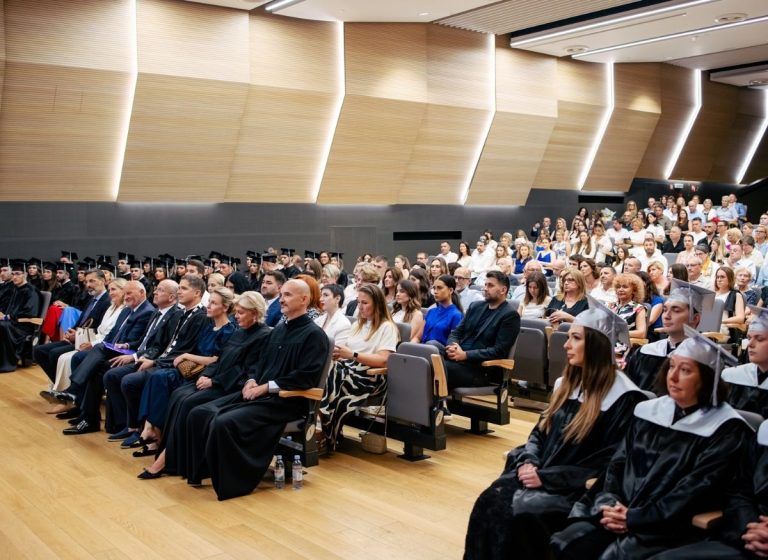
Through the EUonAIR alliance, ZSEM is introducing artificial intelligence into higher education.
EUonAIR AI Summit in Zagrebu